Projectorsfor Home

Best Projector for Living Room

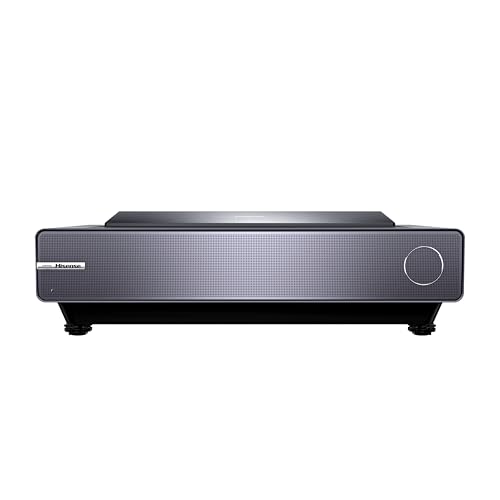
The Hisense PX2-PRO (~$2,500) is the best living room projector. It is an ultra-short-throw laser TV that sits inches from your wall, projects 100-130 inches with TriChroma laser technology, and handles ambient light with 2,400 lumens. Google TV is built in with Dolby Vision and Dolby Atmos speakers. If you need even more brightness for a sun-drenched room, the Epson EpiqVision Ultra LS800 (~$3,500) pushes 4,000 lumens.

Not sure which projector? Find your match in 60 seconds.

Take our quiz

Top 3 Picks

Hisense PX2-PRO
8.7/10

$2500

The best ultra-short throw TV replacement. TriChroma laser delivers vivid 4K from inches away with Dolby Vision.

TriChroma laser UST that sits inches from your wall and replaces your TV entirely. 2,400 lumens handles living room windows, Google TV with Dolby Vision built in, and Dolby Atmos speakers mean you may not need a soundbar. True TV replacement experience.

4K UHD2,400 lumensUltra-short throw (0.25:1)30ms input lag
Pros
  • + Ultra-short throw sits below the screen
  • + TriChroma laser for wide color gamut
  • + Dolby Vision and Atmos support
  • + Google TV with Netflix built in
  • + 2,400 lumens handles ambient light
Cons
  • - Requires dedicated ALR screen ($500+)
  • - Fixed throw ratio (no zoom)
  • - Audio quality is average
Check Price on Amazon
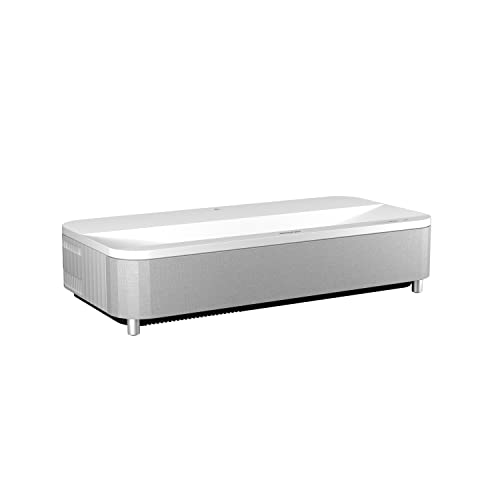
Epson EpiqVision Ultra LS800

The ultimate TV replacement. Ultra-short throw laser that projects 150 inches from inches away with 4,000 lumens.

The brightest UST in its class at 4,000 lumens, dominating ambient light in even the sunniest rooms. 4K PRO-UHD with Android TV built in. Premium price but unmatched daylight performance for a projector that sits on your furniture.

4K PRO-UHD (pixel shift)4,000 lumensUltra-short throw30ms input lag
Pros
  • + Ultra-short throw (inches from wall)
  • + 4,000 lumens fights ambient light
  • + 2.1ch Yamaha speakers built in
  • + Android TV with streaming apps
  • + Laser light source (20,000 hours)
Cons
  • - Requires ALR screen for best results
  • - Fixed throw ratio limits placement
  • - Expensive at $3,500
Check Price on Amazon
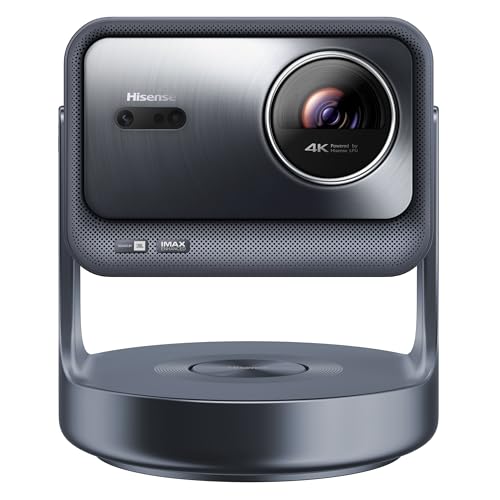
Hisense C2 Ultra
8.6/10

$1800

A versatile triple-laser 4K projector with JBL sound, optical zoom, and a gimbal design that projects anywhere.

Standard-throw alternative at $1,800 with 4K tri-laser, 3,200 lumens, Google TV, and a 65dB speaker system. Delivers excellent brightness for ambient light rooms without the UST price premium, though you will need ceiling mounting or shelf space.

4K UHD3,000 lumensStandard throw (0.9-1.5:1)20ms input lag
Pros
  • + Triple laser with 3,000 lumens
  • + Optical zoom (1.67x) and lens shift
  • + 360-degree gimbal for any angle
  • + JBL speakers built in
  • + Dolby Vision and IMAX Enhanced
Cons
  • - No battery (AC power required)
  • - Large for a 'portable' projector
  • - Premium price for a standard-throw unit
Check Price on Amazon

What We Look For

Brightness (lumens), ultra-short-throw convenience, built-in smart features, ambient light handling.

Buying Guide

The living room is the hardest room for a projector because of ambient light. Windows, overhead lights, and reflected sunlight all wash out projected images. This is why brightness (measured in lumens) is the most critical spec for living room use. You need at least 2,500 lumens for a room with curtained windows, and 3,500+ for daylight viewing. The Hisense PX2-PRO at 2,400 lumens works well with curtains drawn, while the Epson LS800's 4,000 lumens can compete with afternoon sun.

The UST Value Proposition

Ultra-short-throw projectors changed the living room projector game. Instead of ceiling mounting a projector 10+ feet from the wall and running HDMI cables through the ceiling, a UST sits on your TV stand and projects from inches away. No shadows when someone walks in front of the screen. No visible cables. The setup experience is closer to plugging in a TV than installing a traditional projector. The trade-off is price: UST projectors cost $1,500-$4,000+, while standard-throw projectors with similar image quality start around $800.

Ambient Light Rejecting Screens Make a Huge Difference

If you are spending $2,000+ on a living room projector, pair it with an ambient light rejecting (ALR) screen. ALR screens have a special optical coating that reflects light from the projector angle while absorbing ambient light from other angles. The result is a dramatically brighter, higher-contrast image in a bright room. For UST projectors, a ceiling-light-rejecting (CLR) screen is the right type. This can cost $300-$800 but transforms a washed-out image into something that genuinely competes with a TV.

Built-in Smart Features Save You a Device

Modern living room projectors include Google TV, Android TV, or Samsung's Tizen, giving you Netflix, Disney+, YouTube, and every major streaming app without a separate device. The Hisense PX2-PRO and XGIMI HORIZON 20 Max both include full smart platforms, Bluetooth for wireless audio, and WiFi for streaming. This simplicity matters in a living room where you want a TV-like experience: turn it on, pick a show, watch. Check our home theater page if you have a dedicated dark room instead.
Frequently Asked Questions

Can you use a projector in a room with windows?

Yes, but you need sufficient brightness. For a living room with windows, aim for 2,500+ lumens minimum, and 3,000+ lumens if you watch during daylight hours. Ultra-short-throw laser TVs like the Hisense PX2-PRO handle ambient light best because the image comes from below, reducing washout from overhead lighting. Pairing any projector with an ambient light rejecting (ALR) screen boosts contrast significantly in bright rooms. Close blinds during the brightest parts of the day for the best experience.

What's a laser TV?

A laser TV is an ultra-short-throw projector that sits inches from the wall and projects a 100+ inch image from below. It uses laser light sources instead of lamps, which means 20,000-30,000 hours of life with consistent brightness. Laser TVs are designed as direct TV replacements: you place them on your TV stand, plug them in, and they produce a massive image without ceiling mounting or running cables across the room. The Hisense PX2-PRO and Epson LS800 are both laser TVs.

How many lumens do I need for a living room?

For a living room with typical ambient light (windows with curtains), 2,000+ lumens is the minimum for a watchable image. For comfortable daylight viewing, 2,500-3,000 lumens is the sweet spot. If your room gets direct sunlight, aim for 3,500+ lumens like the Epson LS800's 4,000 lumens. Budget projectors under 1,000 lumens are dark-room only and will look washed out in a living room setting.

Ultra-short-throw vs regular projector: which is better?

UST projectors sit on furniture right below the screen and project from inches away. Regular projectors mount on the ceiling or a shelf 8-15 feet back. UST wins on convenience (no ceiling mount, no cables to run, no shadows from people walking in front), but costs more and requires a flat wall or ALR screen. Regular projectors are more flexible with room layouts and screen sizes, and offer better value at the same image quality. If you want a TV replacement experience, go UST. If you want the best picture for the money, go standard throw.

Related Guides

As an Amazon Associate, projectorsforhome.com earns from qualifying purchases. Prices are approximate and may change. Product information is provided without warranty.